Face/Body Contouring
 Laser Lifting
 Pigmentation
 Skin Boosters
 Scars/Pores/Acne
 Thread Lifting
 Nutritional Injections
 Skin Care
 Face/Body ContouringLaser LiftingPigmentationSkin BoostersScars/Pores/AcneThread LiftingNutritional InjectionsSkin Care
When researching Thermage, many people notice a version called FLX and wonder: "Is it just the same thing with a higher price tag?" The answer is no. Thermage FLX isn't simply a newer label — it represents a meaningful improvement in how energy is delivered and how comfortable the procedure feels. Knowing the difference before your consultation at a Myeongdong dermatology clinic makes it much easier to decide which direction suits you.
👉 ID Clinic Treatment Information · Gangnam · Hongdae · Myeongdong
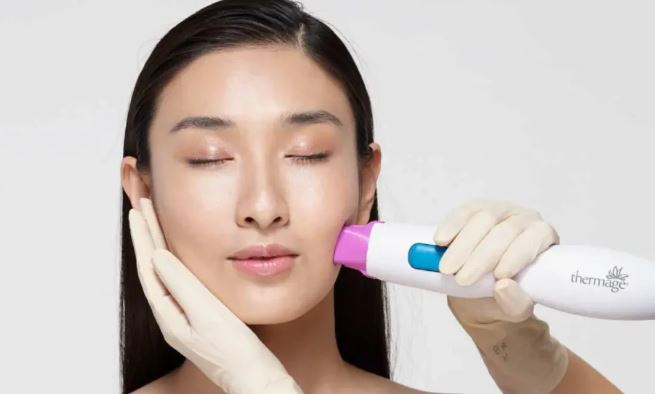
Thermage is a non-invasive lifting treatment that uses radiofrequency (RF) energy to uniformly heat the dermis, stimulating collagen regeneration and restoring skin elasticity. Because it works beneath the skin surface without damaging it, Thermage is frequently discussed for concerns like elasticity loss, skin laxity, and enlarged pores.
According to the American Academy of Dermatology, radiofrequency-based non-invasive treatments can effectively stimulate collagen production in the dermis and improve skin elasticity.
Thermage FLX is the latest generation of Thermage, featuring three key improvements over the original.
AccuREP Technology — The device reads skin condition in real time and automatically adjusts energy delivery, optimizing output based on skin thickness and condition at each point. Shorter Treatment Time — FLX delivers the same results approximately 25% less time than the original Thermage. Improved Comfort — A vibration feature has been added, reducing discomfort during the procedure.
Thermage FLX tends to be discussed in the following situations: when skin thickness or elasticity varies noticeably by area, when treatment time is a consideration, or when more precise energy calibration is needed based on individual skin condition.
ID Clinic Myeongdong assesses skin condition before every Thermage consultation and advises on whether FLX or the original version is the more appropriate fit.
Thermage (Original) | Thermage FLX | |
|---|---|---|
Energy delivery | Fixed energy output | AccuREP real-time auto-adjustment |
Treatment time | Relatively longer | ~25% shorter |
Comfort | Standard | Vibration feature added |
Best suited for | Overall elasticity decline | Area-specific skin concerns |
In common | RF energy · Dermal collagen stimulation · Non-invasive |
👉 ID Clinic Treatment Information · Gangnam · Hongdae · Myeongdong
Both Thermage and Thermage FLX may cause temporary redness or mild swelling, which typically subsides within 1–2 days. Sunscreen use is recommended immediately following the treatment.
Radiofrequency energy-based medical devices are subject to safety and efficacy approval standards. Confirming that the device being used is properly certified before treatment is an important consideration.
First, based on my skin condition, which would suit me better — Thermage FLX or the original? Second, what practical difference would AccuREP technology actually make for my skin? Third, when can I expect to start seeing results, and how long do they typically last?
These three questions will make your Myeongdong Thermage consultation significantly more focused.
Q1. Is there a meaningful difference in results between Thermage FLX and the original? The direction of results is the same, but FLX's real-time energy adjustment responds more precisely to skin condition. For people with noticeable variation in skin thickness across different areas, FLX allows for more targeted delivery.
Q2. How long does a Thermage FLX session take? A full-face session typically takes around 45 minutes to 1 hour. This is approximately 25% shorter than the original Thermage.
Q3. How many Thermage sessions are needed? Most people see results from a single session. Re-treatment is typically considered at 6-month to 1-year intervals depending on skin condition.
Q4. When do Thermage FLX results start to show? Some people notice improved firmness immediately after treatment. The full collagen-driven effect usually appears within 1 to 3 months.
Q5. Can Thermage FLX be applied to areas beyond the face? Yes — the eye area, neck, and body areas can also be treated. The applicable zones depend on individual condition and are confirmed in consultation.
Q6. Is combining Thermage with Ultherapy more effective? Thermage addresses dermal elasticity while Ultherapy targets structural lifting at the SMAS layer. When both sagging and elasticity loss are present, a combination treatment is highly recommended.
Q7. How does a Thermage FLX consultation at Myeongdong proceed? ID Clinic Myeongdong assesses skin condition first, then advises on whether FLX or the original is appropriate and which areas to treat.
If you're unsure whether Thermage FLX or regular Thermage is right for your skin, the most important starting point isn't the device comparison — it's understanding your skin condition first.
👉 ID Clinic Treatment Information · Gangnam · Hongdae · Myeongdong